For anglers who demand razor-sharp hooks and rock-solid performance, Gamakatsu jigheads have long been a top choice. Combining premium materials, innovative design, and legendary sharpness, these jigheads excel in a wide range of fishing situations—from finesse presentations to heavy cover applications. Whether you're a tournament pro or a weekend warrior, understanding what makes Gamakatsu jigheads stand out can help you catch more fish.
The Gamakatsu Difference: Hook Quality and Sharpness
Gamakatsu is renowned worldwide for manufacturing some of the sharpest and strongest hooks in the fishing industry. Their jigheads feature the same high-carbon steel and advanced tempering processes that give their standalone hooks legendary status. The hook points are chemically sharpened to a precise, needle-like tip that penetrates easily and holds securely, reducing the number of missed strikes and lost fish. Unlike cheaper jigheads that may dull quickly or bend under pressure, Gamakatsu jigheads maintain their integrity even after repeated use and hard fights with aggressive fish. The attention to detail extends to the hook eye, which is often welded or closed to prevent line fraying, and the finish, which resists corrosion in both fresh and saltwater environments.
Additionally, Gamakatsu's proprietary Nano Smooth Coat finish reduces friction as the hook penetrates, allowing for deeper and quicker hooksets with less effort. This technology also helps the hook slide through the mouths of fish with minimal resistance, ensuring a solid hold even on soft-mouthed species like crappie and trout. For anglers who have experienced the frustration of losing fish due to dull hooks, the upgrade to Gamakatsu is immediately noticeable.
Popular Gamakatsu Jighead Styles and Their Applications
Gamakatsu produces a variety of jighead styles tailored to specific fishing techniques and target species. Some of the most commonly used include round ball heads, darter heads, shaky heads, and swimbait heads. Each design incorporates a different head shape, line tie placement, and hook configuration to optimize performance.
- Round Ball Heads: The classic all-purpose jighead ideal for live bait or small soft plastics like grubs and worms. They provide a natural fall and are perfect for panfish, crappie, and finesse bass presentations.
- Darter Heads: Designed with a streamlined, wedge-shaped head that cuts through water quickly and excels in current or when swimming baits. They are a top choice for fishing rivers and for aggressive retrieves.
- Shaky Heads: Featuring a flat-bottomed head that stands the bait up off the bottom, these are deadly for dragging or hopping along structure. The Gamakatsu shaky heads often have a screw-lock or spring keeper to securely hold worms and creature baits.
- Swimbait Heads: Built with a weighted keel and a strong, wide-gap hook, these are made for rigging soft swimbaits and other large plastics. They allow for a lifelike swimming action and provide excellent hook-setting leverage.
While these are just a few examples, Gamakatsu's lineup also includes specialized heads for drop shotting, ned rigs, and saltwater applications. The right style depends on the cover you're fishing, the bait you're using, and the behavior of the fish. For instance, shaky heads excel when bass are holding tight to rocky points, while darter heads are better for covering open water quickly.
Matching Jigheads to Soft Plastics
One of the keys to success with jigheads is pairing them with the appropriate soft plastic lure. The size and shape of the jighead should complement the bait's action and profile. For small finesse worms and tiny craws, a light round ball head or a subtle darter head works best. For bulkier creature baits or swimbaits, a larger, heavier head with a wide-gap hook is necessary to allow proper hook exposure and natural movement. Gamakatsu jigheads are available in a range of hook sizes (from #6 to 6/0 and larger) and weights (1/32 oz to over 1 oz), making it easy to fine-tune your rig. Pay attention to the gap between the hook point and shank; it should be wide enough to accommodate the plastic's thickness without impeding hooksets. Some Gamakatsu jigheads come with bait keepers like wire coils or lead barbs that grip soft plastics and prevent them from sliding down the hook. Using these keepers extends bait life and keeps your presentation looking natural even after multiple casts.
Moreover, the shape of the jighead can influence the action of the bait. A round head gives a subtle, gliding fall, while a darter head imparts a more erratic darting motion. A shaky head stands the bait upright, which can be irresistible to inactive bass. Experimenting with different combinations will help you dial in what the fish want on any given day. Additionally, consider the buoyancy of the plastic; some baits are heavily salted and sink faster, while others are more buoyant and require a slightly heavier head to maintain bottom contact.
Rigging Techniques for Gamakatsu Jigheads
Rigging a soft plastic on a Gamakatsu jighead is straightforward, but doing it correctly ensures maximum action and hookup ratio. Start by threading the hook point into the nose of the bait and sliding it up the shank until the bait's head butts against the jighead. For straight-tailed worms, insert the hook point into the center of the worm's nose and push it through about a quarter inch, then slide the worm up and rotate it to bury the hook point back into the plastic to make it weedless. For baits with appendages, like craws or creatures, position the bait so the hook exits on the top side, allowing the appendages to face downward for a natural defensive posture. When using braided line, a slightly softer hookset is recommended to avoid pulling the bait from the fish's mouth, thanks to Gamakatsu's ultra-sharp points. For open-water presentations, leaving the hook point exposed often results in better hook penetration; for heavy cover, Texas-rigging with the point buried is essential. Always check that the bait is straight on the hook to avoid an unnatural spin.
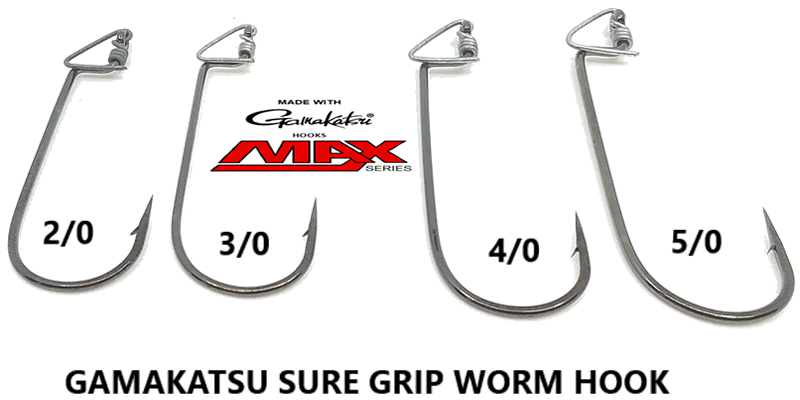
Another important tip is to match the hook size to the bait's length. A hook that is too large will overwhelm the bait and restrict its action, while a hook that is too small may not provide enough gap for a solid hookset. When using screw-lock or spring keepers, twist the bait onto the keeper until it is snug but not distorted. This secures the plastic and prevents it from sliding down, which is particularly useful when fishing in heavy cover or making long casts where the bait may be subjected to more force.
Durability and Corrosion Resistance
Gamakatsu jigheads are built to withstand the rigors of hard fishing. The hooks are forged from high-carbon steel, which provides superior strength compared to standard wire hooks. This means they resist bending and breaking even when hauling big bass from heavy cover or battling toothy saltwater predators. Additionally, Gamakatsu applies advanced coatings to their jigheads, such as their proprietary Nano Smooth Coat or black nickel finishes, which reduce friction for deeper penetration and offer excellent corrosion resistance. For anglers who fish in saltwater or brackish environments, this durability is critical—inferior jigheads can rust quickly, dulling hooks and weakening the assembly. Gamakatsu's finishes also help the jigheads slide through vegetation and cover more easily, reducing snags. While no hook is completely immune to rust, Gamakatsu's attention to metal treatment ensures that their jigheads remain sharp and reliable trip after trip.
Furthermore, the lead used in Gamakatsu jigheads is often coated or painted with a durable finish that resists chipping and fading, maintaining the jighead's appearance and effectiveness over time. This is especially important for anglers who fish rocky or abrasive environments where lesser jigheads would quickly lose their paint and become unsightly. The overall build quality of Gamakatsu jigheads means that you spend less time re-rigging and more time fishing, which can make a significant difference during a hot bite.
"The difference between a good jighead and a great one is often in the hook. Gamakatsu's sharpness and strength give me confidence that when a fish bites, it's coming in the boat." — A common sentiment among tournament anglers.
Choosing the Right Weight and Size
Selecting the proper jighead weight is often the difference between success and failure on the water. The weight determines the rate of fall, the depth you can effectively fish, and the overall action of your bait. As a general rule, use the lightest weight that allows you to maintain contact with the bottom and feel the bait. For shallow water (under 5 feet) or when fish are finicky, a 1/16 oz or 1/8 oz jighead is ideal. In deeper water (10-20 feet) or when fishing in current or wind, you may need to step up to 1/4 oz, 3/8 oz, or heavier to keep your bait in the strike zone. Gamakatsu jigheads are precisely weighted, so you can trust that a 1/4 oz head actually weighs 1/4 oz—a detail that matters when fine-tuning your presentation. Also consider the size of the hook relative to the bait and the fish you're targeting. For panfish, a small #6 or #4 hook is sufficient; for bass, 1/0 to 4/0 are common; for large swimbaits and saltwater species, 5/0 to 8/0 might be necessary. Gamakatsu's lineup covers the full spectrum, ensuring you'll find the perfect match for your local waters.
It's also worth noting that water temperature and fish activity level play a role in weight selection. In cold water, fish are often lethargic and prefer a slower fall, so a lighter jighead allows the bait to sink more slowly and gives the fish more time to react. Conversely, in warm water when fish are aggressive, a heavier jighead can trigger reaction strikes by quickly reaching the strike zone. Experimenting with different weights on the same bait can reveal subtle preferences that can lead to more bites. Gamakatsu's consistent weight accuracy makes it easy to replicate successful patterns.